


Why Take the Deep Diver Specialty Course

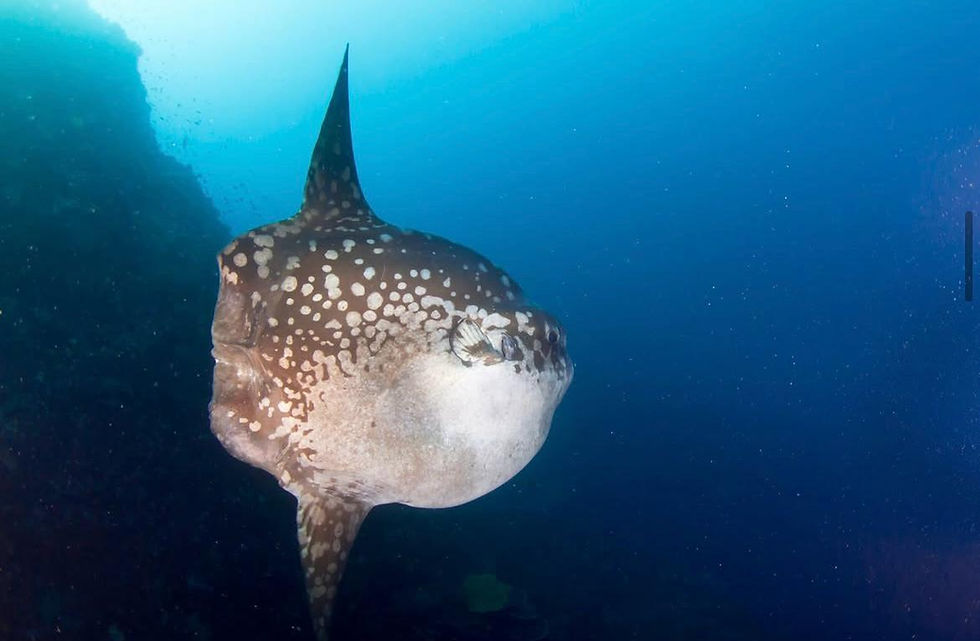
There’s something incredibly exciting about going deep. That moment when the blue gets a little darker, the world feels a little quieter, and adventure truly begins. Some of the coolest dive sites in the world lie deep below the surface: commonly shipwrecks tend to be found at greater depths, thriving coral walls that descend endlessly and the strange and curious creatures that prefer the twilight zone.
If you’ve ever wanted to explore deeper dive sites safely and confidently, the PADI Deep Diver Specialty is the next step in your diving journey.
Why do I have to take a deep diver specialty course?
Going deep can be super cool and a great adventure, but going deeper comes with added risk. You wouldn't climb Mount Everest without a bit of training and learning what to expect first - and diving deeper is no different. Any dive below 18 meters is considered a “Deep” dive. To start with, when we dive at greater depths, we are further away from the surface should any difficulties arise, but also, the added pressure at depth, affects not only our mind and body, but also our equipment and air consumption. It is vital that if you want to dive deeper, you need to know about the added risks, what to expect and how to avoid getting into danger, so you can dive responsibly and make the most of every minute underwater.
So what's different at depth then?
Air: Because air becomes more dense with increased pressure, you’ll breathe through your air faster at depth, so you need to monitor your air more frequently and have back-up plans.
Nitrogen: Nitrogen can be narcotic at depth. The more pressure, the more Nitrogen will be absorbed. Recognising the signs of Nitrogen narcosis (in yourself and your buddy) as well as how to respond or avoid it, is paramount.
Colour: The deeper we go, the less light is absorbed. This causes interesting colour changes.
Learning to manage all these factors is what makes a good diver. Taking a Deep Diver Specialty course gives you knowledge, confidence, and experience to handle the unique challenges of deep diving, safely.
What you will learn on the PADI Deep Diver Course
The course consits of some theory and four dives, over which you’ll gradually extend your depth limits. On the first 2 course dives, you will have a maximum depth of 30 metres. The following 2 dives you will have a maximum depth of 40 metres, the maximum recreational dive depth. Each dive builds on what you learned before, giving you time to adapt and feel comfortable at depth.
Here’s a taste of what’s included:
Experience colour loss and light absorption take a colour slate on your dive and see what happens to each colour as you descend to greater depths
Experiment with pressure take various objects on the dive to see what the effects of pressure has, typically a squishy bottle or tennis balls.
Perform a simple task You will be asked to perform a simple task at depth to observe how nitrogen affects your concentration and coordination.
Compare your depth gauge or dive computer Make a comparison with your instructor or buddy to demonstrate how small differences can matter.
Practice deep navigation, Use a compass to swim a simple course, learning how to keep your bearings even when visibility drops.
Simulate an emergency situation Understand the importance of having a back-up and then breath from an emergency air source during your safety stop — either from a hang tank or a pony bottle.
By the end of the PADI Deep Diver course, you won’t just have a certification card — you’ll have the confidence and ability to explore deeper, more challenging dive sites safely. You’ll understand your limits, recognise how your body responds to depth, and know exactly how to plan and execute deeper dives responsibly.

The PADI Deep Diver Specialty opens the door to incredible new adventures, from exploring wrecks and walls to spotting rare marine life that lives where most divers never go.
So if you’ve ever looked down into the blue and wondered what lies beyond… this is your chance to find out. Book your PADI Deep Diver course with us today!


